
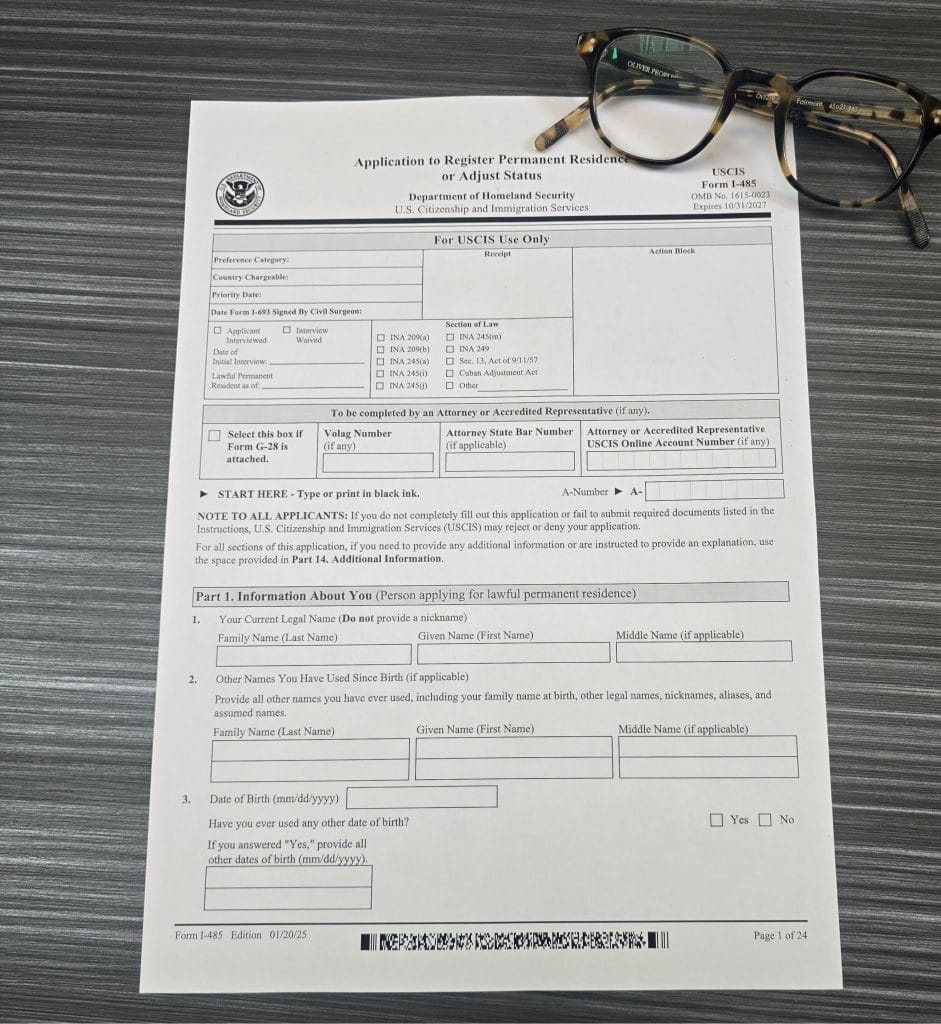
Most immigrants applying for a green card based on a family-based petition must prove that they will not be a “public charge.” This means the government looks at whether a person is likely to become primarily dependent on the government for subsistence. Currently, the U.S. government requires that an immigrant be sponsored. This involves the sponsor completing an Affidavit of Support (Form I-864) and submitting it with evidence showing that the sponsor has sufficient assets to support the immigrant so that the immigrant will not be dependent on the government for care.
Current law on public charge
Our current law defines which benefits immigrants are not eligible to receive. These include Supplemental Security Income (SSI), Temporary Assistance for Needy Families (TANF), and long-term institutionalization at government expense. The government considers factors when making a public charge determination. Immigrants, for the most part, are not eligible for benefit programs, so there are few denials based on public-charge inadmissibility.
Proposed new public charge regulations
In November 2025, the Trump Administration proposed new regulations. The government received over 8,000 comments during the public comment period! The regulations have not yet been finalized; suffice it to say, some of them constitute a significant departure from our established law. For a deep dive into the technical legal concerns, I highly recommend my colleague Jason Levy’s analysis, “Think Immigration: Why We Have Concerns About What the Trump Administration Considers a Public Charge.”
The government’s proposed regulations, combined with their hostile attitude toward immigration in general, have made everyone frightened. People who are legally entitled to benefits are stopping those benefits at risk to their health or their family’s health, and/or are worried about being rejected. I have five ideas that you can use now to proactively strengthen your application so that if the rules change, you will still be in a good position going forward.
1. Do not Panic/ File with a Complete Affidavit of Support
At the outset, it is important to note that nothing has changed. The Trump Administration’s proposals are only proposals. Nevertheless, when determining whether someone will be a public charge, the affidavit of support is always looked at first. So, before you file, ensure that the sponsor’s income, combined with the number of people they support, is at least 125% of the poverty guidelines. Ensure that the tax returns from the current tax year show this and/or that there is adequate proof of assets to show this if necessary.
If by the time of your interview, more than six months have passed, or it is a new tax year, bring new proof to show that the sponsor still has sufficient income to be the sponsor, and be prepared to submit this proof if the officer asks for it.
2. Fill out Form I-485, Application to Register Permanent Residence or Adjust Status, Part 9, (p. 19), completely
Part 9 asks about inadmissibility based on income, but there are questions as well about skills and employment. Treat Part 9 like a job application to the United States. If you have a degree from abroad that hasn’t been used yet, list the specific certifications or technical skills it provided. Whether someone will be a public charge is a prospective question: are you likely to be a public charge? You are still going to need an affidavit of support, but if you can show that you are employable and that you have many skills you can use, the officer is less likely to find that you will become a public charge under the current rules or proposed ones.
3. Do not stop accessing “benefit” programs that you need
I have heard stories of people stopping Medi-Cal or SNAP (food stamps or CalFresh) benefits available to all Californians because they think they should not be receiving them. Do not stop. You and the people around you are better off when you are healthy or have good nutrition. These programs are available to all low-income individuals and do not affect the public charge grounds of inadmissibility. Instead, it would be better to bring a letter to the interview or be prepared to discuss why these programs are excluded from the Public Charge Rules and why they do not make you ineligible. You can see a list here of all programs in California that are not affected by the Public Charge Rule.
Nevertheless, if you can afford to leave these programs and purchase insurance, it would be best to do so. You may then tell the officer that you needed assistance from these programs, but it was short-term, and that you can now purchase insurance or have insurance through your work.
Crucially, if you are receiving Social Security Disability Insurance (SSDI), this is an earned benefit based on your work history and does not trigger public charge inadmissibility.
4. Show you are healthy
Health is a factor, even under the current rules, and plays a more important role under the proposed ones. This is of more concern if you are older. If you have a chronic condition, obtain a letter from a specialist to provide at the interview if necessary. It should state that your condition is well-managed and does not prevent you from working or living independently. If you have private health insurance, include the policy’s “Summary of Benefits.” Showing you are covered by a private plan is one of the strongest defenses against a public charge finding.
5. Document your income
By the time of your interview, you may have received your work authorization card and may be working (legally). Bring with you proof of your employment, proof of savings, filing of your taxes, whatever you have. You will still need the affidavit of support, but if the rules change while your application is pending, you will be in a strong position to show that, under the totality of circumstances, you will not become a public charge.
While these strategies are essential if the law changes, they are best practices for any successful interview today. Be prepared, have items to present if requested, and you will be in good shape to succeed at your interview.

